

What’s New at ACLS
ACLS Statement on National Call to Action Issued by the US Secretary of Education
ACLS Statement on National Call to Action Issued by the US Secretary of Education
ACLS calls on Secretary McMahon and all readers of her letter to stand with us in support of this vital knowledge and for the funding it deserves.
Community Message for August 2026
Community Message for August 2026
ACLS Senior Program Officer Alison Chang reflects on how the Mellon/ACLS Dissertation Innovation Fellowship defines “innovation” across disciplines.
ACLS Statement on OMB Proposal for Federal Research Grants
ACLS Statement on OMB Proposal for Federal Research Grants
The American Council of Learned Societies (ACLS) stands in solidarity with members of the science community in strongly opposing the Office of Management and Budget’s proposal for new criteria and process for federal funding for scientific research.
Federal Judge Rules to Restore National Endowment for the Humanities Funding In Historic Case
Federal Judge Rules to Restore National Endowment for the Humanities Funding In Historic Case
In the 143-page decision, US District Judge Colleen McMahon ruled that the mass termination by the National Endowment for the Humanities (NEH) of more than 1,400 grants to support scholars, research institutions, and humanities organizations was “unlawful, unconstitutional, ultra vires, and without legal effect.”
2026-27 Fellowship and Grant Competitions
2026-27 Fellowship and Grant Competitions
ACLS is pleased to announce our 2026-27 fellowship and grant competitions, which promote research and public engagement across all fields of the humanities and social sciences.
ACLS Signs Coalition for International Education Letter on Elimination of Title VI and Fulbright Funding
ACLS Signs Coalition for International Education Letter on Elimination of Title VI and Fulbright Funding
This article states the ACLS joined CIE letter calling to reverse the elimination of future funding for HEA-Title VI and Fulbright Hays.
Strategic Framework 2025-2030
Strategic Framework 2025-2030
ACLS shares our first progress update on our 2025-2030 Strategic Framework, Bold Action For Strength and Growth.
ACLS Statement on National Call to Action Issued by the US Secretary of Education
ACLS calls on Secretary McMahon and all readers of her letter to stand with us in support of this vital knowledge and for the funding it deserves.
Community Message for August 2026
ACLS Senior Program Officer Alison Chang reflects on how the Mellon/ACLS Dissertation Innovation Fellowship defines “innovation” across disciplines.
ACLS Statement on OMB Proposal for Federal Research Grants
The American Council of Learned Societies (ACLS) stands in solidarity with members of the science community in strongly opposing the Office of Management and Budget’s proposal for new criteria and process for federal funding for scientific research.
Federal Judge Rules to Restore National Endowment for the Humanities Funding In Historic Case
In the 143-page decision, US District Judge Colleen McMahon ruled that the mass termination by the National Endowment for the Humanities (NEH) of more than 1,400 grants to support scholars, research institutions, and humanities organizations was “unlawful, unconstitutional, ultra vires, and without legal effect.”
2026-27 Fellowship and Grant Competitions
ACLS is pleased to announce our 2026-27 fellowship and grant competitions, which promote research and public engagement across all fields of the humanities and social sciences.
ACLS Signs Coalition for International Education Letter on Elimination of Title VI and Fulbright Funding
This article states the ACLS joined CIE letter calling to reverse the elimination of future funding for HEA-Title VI and Fulbright Hays.
Strategic Framework 2025-2030
ACLS shares our first progress update on our 2025-2030 Strategic Framework, Bold Action For Strength and Growth.
Adam Cilli
University of Pittsburgh, Greensburg
Arathi Menon
Hamilton College
Aruna Gamage
SOAS, University of London
Benedicta Lomotey
University of Ghana
Brandon Scott
Massachusetts Institute of Technology
Brian Bond
University of California, Berkeley
Corey Johnson
Asian Americans Advancing Justice
Daniel Wojahn
University of Oxford
An Jiang
Dendup Chophel
Friedrich Alexander Universität Erlangen-Nürnberg
Ebenezer Concepcion
YWCA Metropolitan Chicago
Ehlimana Memisevic
University of Sarajevo
Yidong Gong
New College of Florida
Emil Kerenji
US Holocaust Memorial Museum
Eric Harvey
Independent Scholar
Guadalupe Escobar
University of Nevada, Reno
Jerome Clark
Arizona State University West
Jacqueline Stewart
University of Chicago
Magdalena Grabowska
The Polish Academy of Sciences
Jakeya Caruthers
Drexel University
Jane Landers
Vanderbilt University
Jesse Drian
University of California, Los Angeles, Richard C. Rudolph East Asian Library
Jorge Marcone
Rutgers University-New Brunswick
Jose J. Morales Benitez
University of Puerto Rico at Mayaguez
Godwin Onuoha
Mercer County Community College
Joshua Reason
University of Pennsylvania
Katrina Powell
Virginia Polytechnic Institute & State University
Kelly Carlton
Princeton University
Khadeeja Majoka
Columbia University
Yun-chen Lu
DePaul University
Kiara Childs
Data & Society
Guttorm Gundersen
Harvard University
Margaret Jacobs
University of Nebraska-Lincoln
Margie Tang-Oxley
University of Minnesota, Twin Cities
Mark Letteney
Massachusetts Institute of Technology
Mira Xenia Schwerda
University of Edinburgh
Osama Siddiqui
Providence College
Matthew West
George Mason University
Melanie Chambliss
University of Rochester
Meshell Sturgis
University of Washington
Monica Styles
Howard University
Nicole Navarro
Thurgood Marshall College Fund
Rachel Quist
University of Kansas
Rachelle Saruya
University of Toronto, Mississauga
Rae Kuruhara
University of California, Los Angeles
Sandy Chang
University of Florida
Sharon Kunde
Duke University
Sonja Gandert
City University of New York, The Graduate Center
Terrance Wooten
University of California, Santa Barbara
Tina Grandinetti
PolicyLink
Toyin Ajose
University of Ibadan
Nils Martin
École Pratique des Hautes Études
Roya Biggie
Knox College
Airlee Ringgold Johnson
Washington College
Alfredo Escudero
Florida International University
Anthony Landers
Rutgers University-New Brunswick
Ashley Duffey
University of Minnesota, Twin Cities
Aynur Kadir
University of British Columbia
Bebel Ibarra
Tulane University
Benjamin Nutor
Texas A&M University
Bianba Deji
University of Hong Kong
Danielle Davis
Florida State University
Francisco Chen-López
Spelman College
Gabrielle Cornish
University of Wisconsin-Madison
Gokh Alshaif
University of California, Santa Barbara
Ha’åni San Nicolas
University of Hawaiʻi at Mānoa
Hillary Langberg
Smithsonian Institution
Irene Brisson
Louisiana State University
Ja Won Lee
California State University, East Bay
Kalzang Bhutia
University of Southern California
Karma Frierson
Washington University in St. Louis
Kristina Hook
Kennesaw State University
Larissa Juip
Michigan Technological University
Peter Szanto
Eötvös Loránd University
Petya Andreeva
Parsons School of Design
Phillippa Pitts
Boston University
Sam Holley-Kline
University of Maryland, College Park
Zachary Caple
Aarhus University
Keitlyn Alcantara
Indiana University Bloomington
Kim Williams-Pulfer
Independent Scholar
Rosa Ficek
University of Puerto Rico at Cayey
Micah Mizukami
University of Hawaiʻi at Mānoa
Amber Reid
The Afiya Center
Gabriel Regalado
Brown University
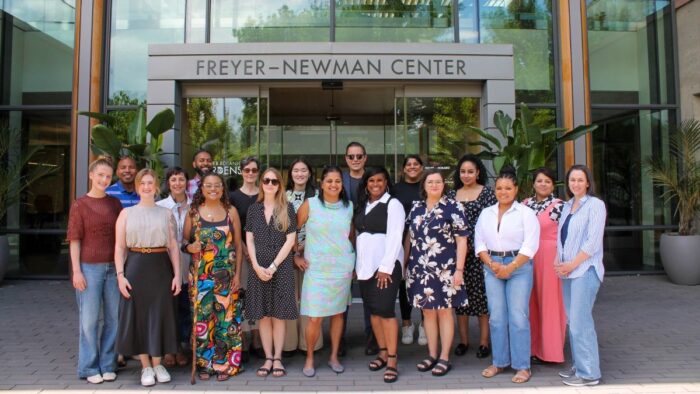
ACLS supports a diverse community of humanistic scholars
Meet Our Recent Awardees
Advancing the Humanities and Social Sciences
Learn more about our new Strategic Framework.
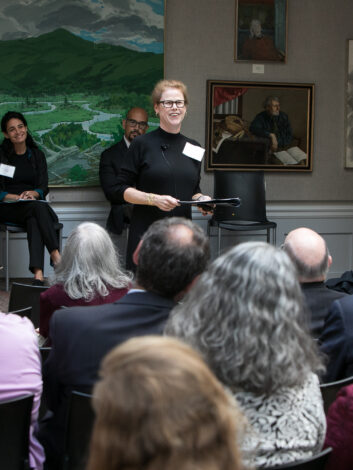
Learn more about our commitment to advancing an academy that embraces a plurality of backgrounds, experiences, and perspectives, all essential for excellence in scholarship.
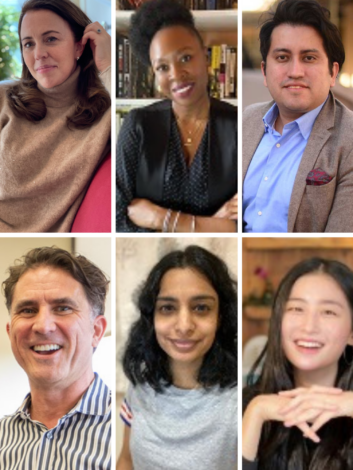
With a contribution to ACLS, you support the research of scholars across the nation and around the world.

Stay In Touch
Sign up for the monthly ACLS Community Newsletter, as well as announcements and updates about programs, events, and more.